Scrum: The Art of Doing Twice the Work in Half the Time
Published:

Published:
Published:
Published:
Published:
Published:
Published:
Published:
Published:
Published:
Published:
Published:
Published:
Published:
“A Short History of Nearly Everything” by Bill Bryson is a popular science book that provides an engaging, accessible exploration of major scientific concepts and discoveries about the universe, Earth, and humanity’s place within it. The book takes readers on a journey through various scientific disciplines, including astronomy, chemistry, biology, geology, and physics, highlighting the achievements and struggles of the scientists who have shaped our understanding of the world.
Published:
“Not Afraid: The Evolution of Eminem” by Anthony Bozza provides a detailed look into the life and career of Marshall Mathers (Eminem), capturing his personal struggles and artistic growth.
Published:
In “The E-Myth Revisited,” Michael Gerber emphasizes the importance of defining your Primary Aim as part of building a business that aligns with your life goals.
Published:
Published:
Types of sufferings/pain
Published:
Overthinking and Dependencies over others
Published:
Doha - Sabhi karma humaro kiye, hum karman te nayara ho. Meaning -
Published:
Chapter 4
Verse 4.40
Published:
Published:
Chapter 5
Verse 5.1-2
Published:
Chapter 5
Verse 5.3
Published:
Chapter 5
Verse 5.4
uparyuktt sannyaas aur karmayog ko moorkh log prthak-prthak phal dene vaale kahate hain na ki panditajan ; kyonki donon mein se ek mein bhee samyak prakaar se sthit purush donon ke phalaroop paramaatma ko praapt hota hai
Published:
Verse 1.1
धृतराष्ट्र उवाच | धर्मक्षेत्रे कुरुक्षेत्रे समवेता युयुत्सवः | मामकाः पाण्डवाश्चैव किमकुर्वत सञ्जय || 1 ||
Translation: Dhritarashtra said: O Sanjaya, assembled in the holy land of Kurukshetra and desirous of battle, what did my sons and the sons of Pandu do?
Verse 1.2
सञ्जय उवाच | दृष्ट्वा तु पाण्डवानीकं व्यूढं दुर्योधनस्तदा | आचार्यमुपसंगम्य राजा वचनमब्रवीत् || 2 ||
Translation: Sanjaya said: O King, after seeing the army of the Pandavas arrayed in military formation, King Duryodhana approached his teacher, Dronacharya, and said the following words.
Verse 1.3
पश्यैतां पाण्डुपुत्राणामाचार्य महतीं चमूम् | व्यूढां द्रुपदपुत्रेण तव शिष्येण धीमता || 3 ||
Translation: Behold, O Teacher, this mighty army of the sons of Pandu, arrayed by the son of Drupada, your wise disciple.
Verse 1.4
अत्र शूरा महेष्वासा भीमार्जुनसमा युधि | युयुधानो विराटश्च द्रुपदश्च महारथः || 4 ||
Translation: Here in this army are many heroic bowmen equal in fighting to Bhima and Arjuna: Yuyudhana, Virata, and the mighty Drupada.
Verse 1.5
धृष्टकेतुश्चेकितानः काशिराजश्च वीर्यवान् | पुरुजित्कुन्तिभोजश्च शैब्यश्च नरपुङ्गवः || 5 ||
Translation: There are also great heroes like Dhrishtaketu, Chekitana, the valiant king of Kashi, Purujit, Kuntibhoja, and Shaibya, the best among men.
Verse 1.6
युधामन्युश्च विक्रान्त उत्तमौजाश्च वीर्यवान् | सौभद्रो द्रौपदेयाश्च सर्व एव महारथाः || 6 ||
Translation: There are the courageous Yudhamanyu and the valiant Uttamaujas, the son of Subhadra, and the sons of Draupadi—all great warriors.
Verse 1.7
अस्माकं तु विशिष्टा ये तान्निबोध द्विजोत्तम | नायका मम सैन्यस्य संज्ञार्थं तान्ब्रवीमि ते || 7 || Translation: O best of the Brahmanas, let me now tell you about the prominent commanders of my army, for your information.
Verse 1.8
भवान्भीष्मश्च कर्णश्च कृपश्च समितिंजयः | अश्वत्थामा विकर्णश्च सौमदत्तिस्तथैव च || 8 || Translation: There are personalities like yourself, Bhishma, Karna, Kripa, Ashwatthama, Vikarna, and Bhurishrava, who are ever victorious in battle.
Verse 1.9
अन्ये च बहवः शूरा मदर्थे त्यक्तजीविताः | नानाशस्त्रप्रहरणाः सर्वे युद्धविशारदाः || 9 || Translation: There are many other heroes who have given up their lives for my sake. They are all skilled in the art of warfare and armed with various weapons.
Verse 1.10
अपर्याप्तं तदस्माकं बलं भीष्माभिरक्षितम् | पर्याप्तं त्विदमेतेषां बलं भीमाभिरक्षितम् || 10 || Translation: Our strength, protected by Bhishma, is unlimited, while the strength of the Pandavas, protected by Bhima, is limited.
Verse 1.11
अयनेषु च सर्वेषु यथाभागमवस्थिताः | भीष्ममेवाभिरक्षन्तु भवन्तः सर्व एव हि || 11 || Translation: Therefore, all of you must now give full support to Bhishma, stationed at your respective strategic points in the formation of the army.
Verse 1.12
तस्य सञ्जनयन्हर्षं कुरुवृद्धः पितामहः | सिंहनादं विनद्योच्चैः शङ्खं दध्मौ प्रतापवान् || 12 || Translation: Then, to encourage Duryodhana, the mighty grandsire of the Kuru dynasty, Bhishma, the oldest among the warriors, blew his conch shell loudly like the roar of a lion.
Verse 1.13
ततः शङ्खाश्च भेर्यश्च पणवानकगोमुखाः | सहसैवाभ्यहन्यन्त स शब्दस्तुमुलोऽभवत् || 13 || Translation: After that, conch shells, kettle drums, tabors, trumpets, and cow horns blared forth, and the combined sound was tumultuous.
Verse 1.14
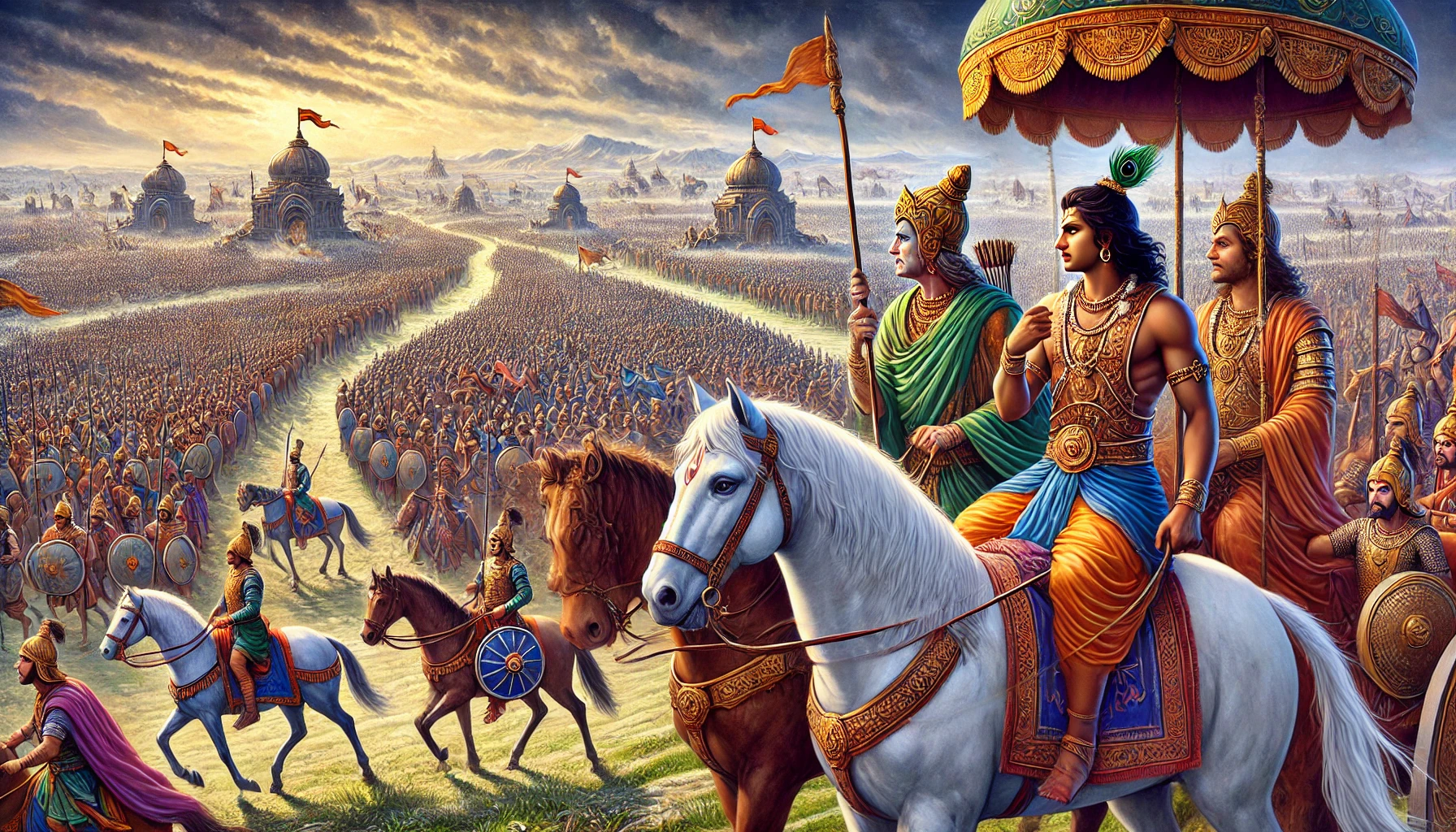
ततः श्वेतैर्हयैर्युक्ते महति स्यन्दने स्थितौ | माधवः पाण्डवश्चैव दिव्यौ शङ्खौ प्रदध्मतुः || 14 || Translation: Then, Lord Krishna and Arjuna, stationed in a grand chariot drawn by white horses, sounded their divine conch shells.
Verse 1.15
पाञ्चजन्यं हृषीकेशो देवदत्तं धनञ्जयः | पौण्ड्रं दध्मौ महाशङ्खं भीमकर्मा वृकोदरः || 15 || Translation: Hrishikesha (Krishna) blew his conch, called Panchajanya, and Arjuna blew his, the Devadatta. Bhima, the performer of mighty deeds, blew his conch, the Paundra.
Verse 1.16
अनन्तविजयं राजा कुन्तीपुत्रो युधिष्ठिरः | नकुलः सहदेवश्च सुघोषमणिपुष्पकौ || 16 || Translation: King Yudhishthira, the son of Kunti, blew his conch, the Anantavijaya, while Nakula and Sahadeva blew the Sughosha and Manipushpaka.
Verse 1.17
काश्यश्च परमेष्वासः शिखण्डी च महारथः | धृष्टद्युम्नो विराटश्च सात्यकिश्चापराजितः || 17 || Translation: The great archer, King of Kashi, the mighty warrior Shikhandi, Dhrishtadyumna, Virata, and the invincible Satyaki blew their respective conch shells.
Verse 1.18
द्रुपदो द्रौपदेयाश्च सर्वशः पृथिवीपते | सौभद्रश्च महाबाहुः शङ्खान्दध्मुः पृथक्पृथक् || 18 || Translation: O King, Drupada, the sons of Draupadi, and the mighty-armed Abhimanyu, son of Subhadra, all blew their respective conch shells.
Verse 1.19
स घोषो धार्तराष्ट्राणां हृदयानि व्यदारयत् | नभश्च पृथिवीं चैव तुमुलोऽभ्यनुनादयन् || 19 || Translation: The tremendous sound, resounding through the sky and earth, shattered the hearts of Dhritarashtra’s sons.
Verse 1.20
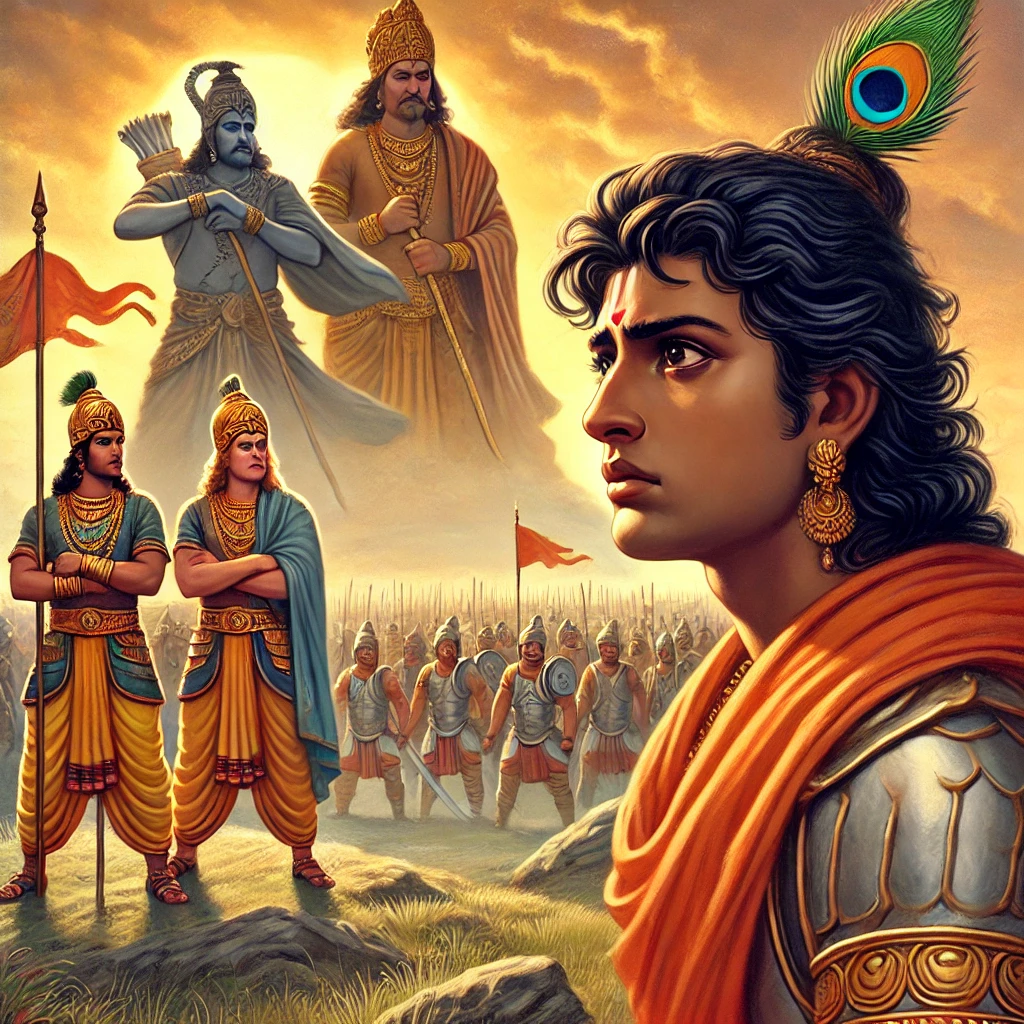
अथ व्यवस्थितान्दृष्ट्वा धार्तराष्ट्रान् कपिध्वजः | प्रवृत्ते शस्त्रसम्पाते धनुरुद्यम्य पाण्डवः || 20 || Translation: At that time, the son of Pandu, Arjuna, whose flag bore the emblem of Hanuman, took up his bow as he prepared to engage in battle, seeing the sons of Dhritarashtra arrayed before him.
Published:
Published:
Published:
 Chapter 1
Published:
Published:
Published:
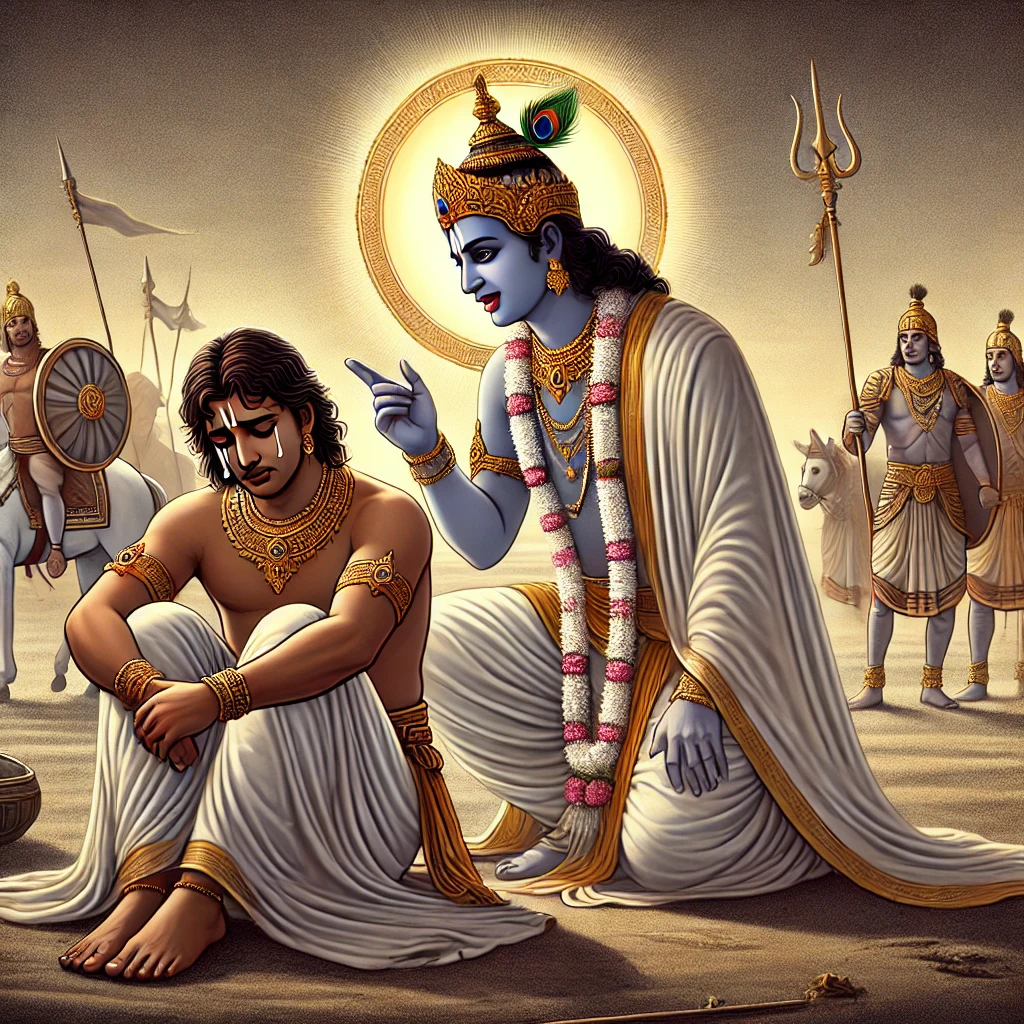
Sanskrit: कार्पण्यदोषोपहतस्वभावः प्रच्छामि त्वां धर्मसम्मूढचेताः। यच्छ्रेयः स्यान्निश्चितं ब्रूहि तन्मे शिष्यस्तेऽहं शाधि मां त्वां प्रपन्नम्।।
Published:
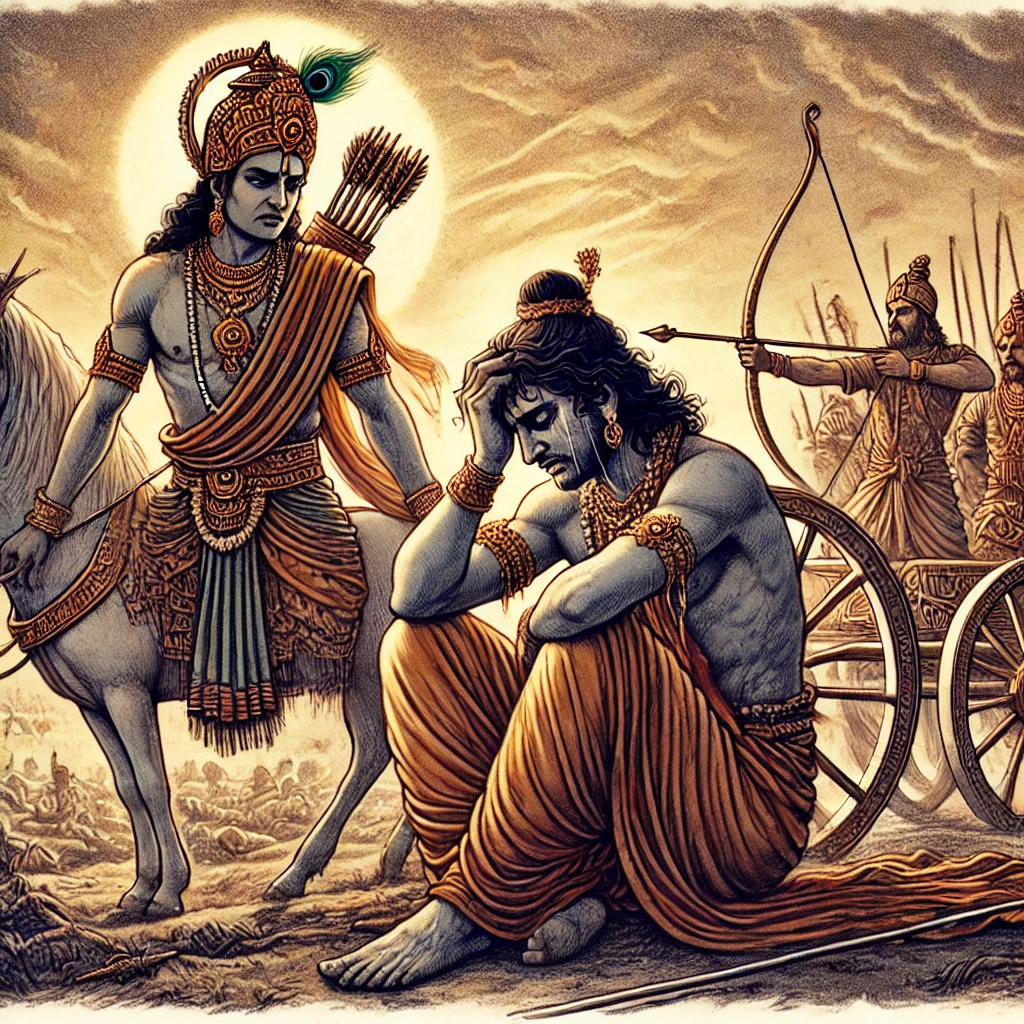
Verse 2.8 (Chapter 2, Sloka 8) न हि प्रपश्यामि ममापनुद्याद् यच्छोकमुच्छोषणमिन्द्रियाणाम् । अवाप्य भूमावसपत्नमृद्धं राज्यं सुराणामपि चाधिपत्यम् ॥
Published:
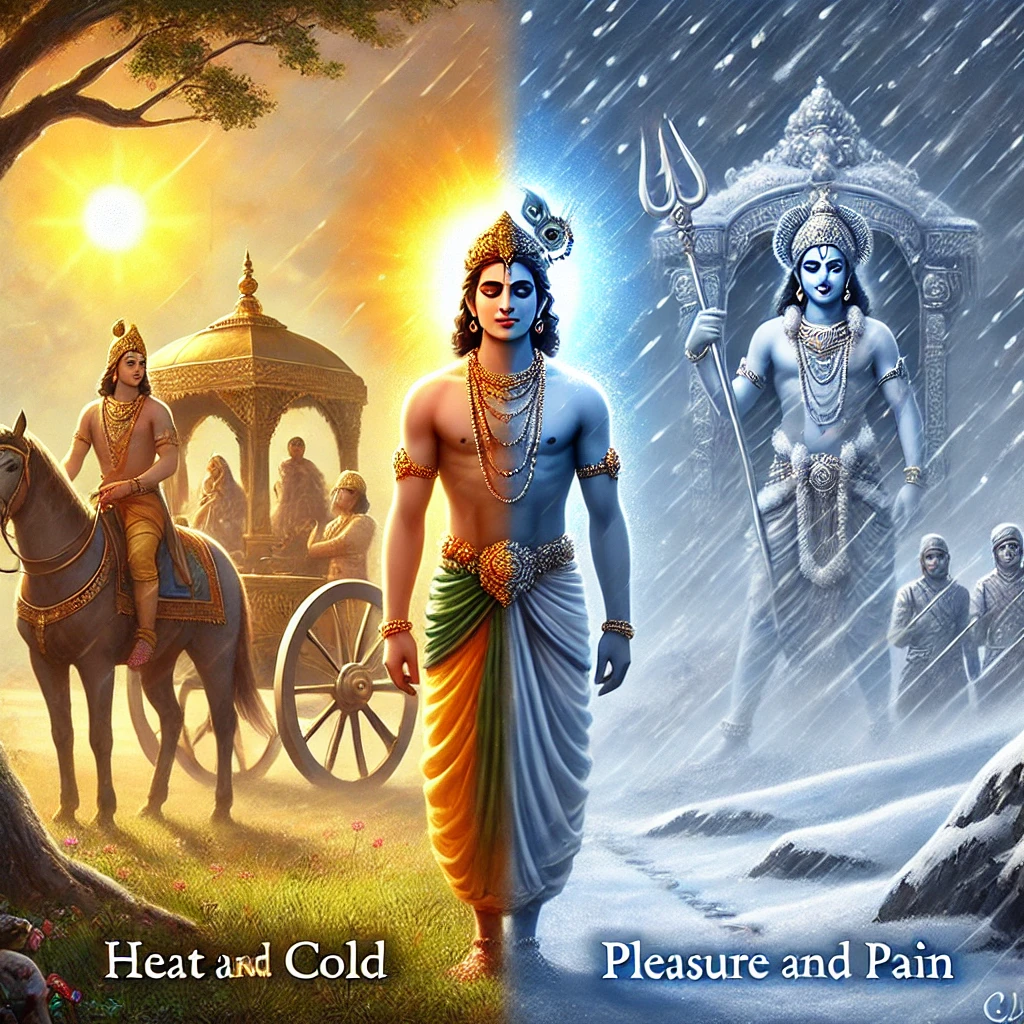
Here is Bhagavad Gita, Chapter 2, Verses 10 and 11, with translations:
Published:
Here are verses 2.12 and 2.13 from the Bhagavad Gita:
Published:
Published:

Published:
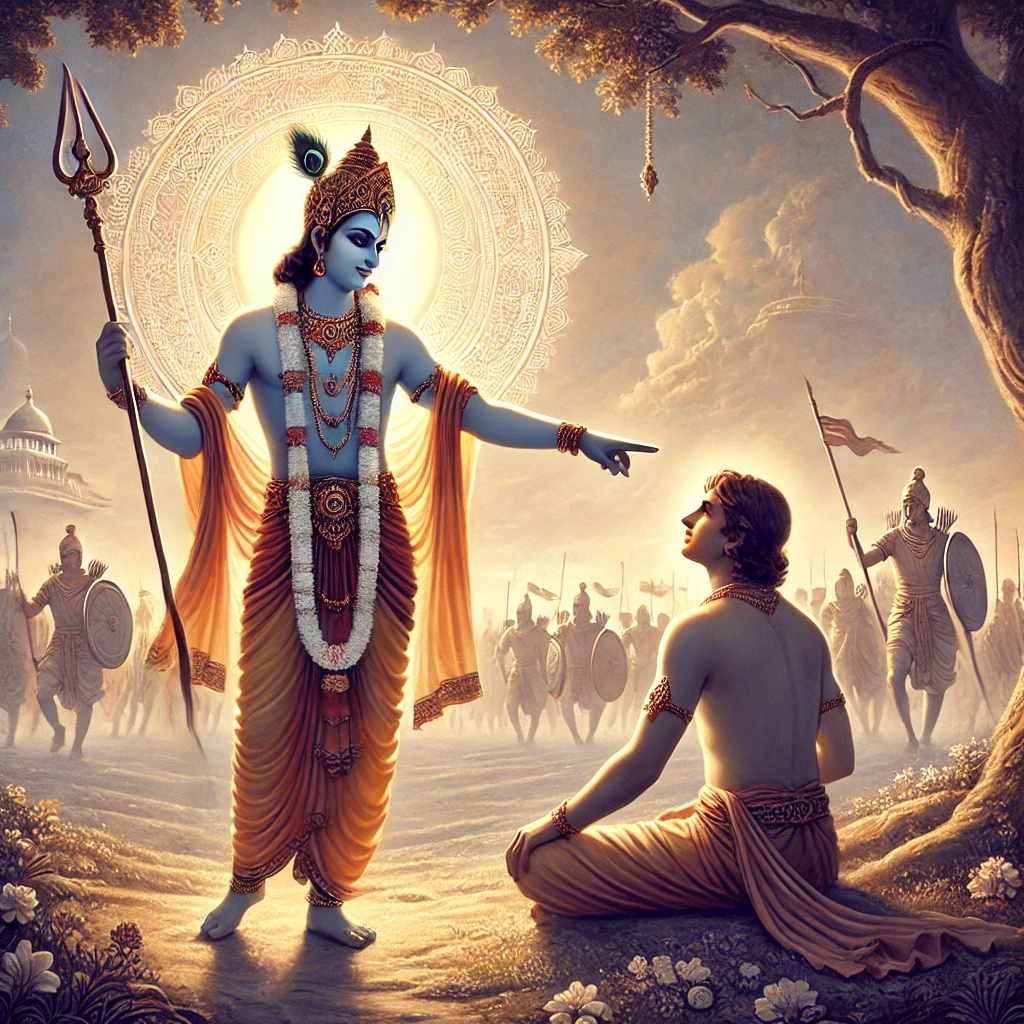
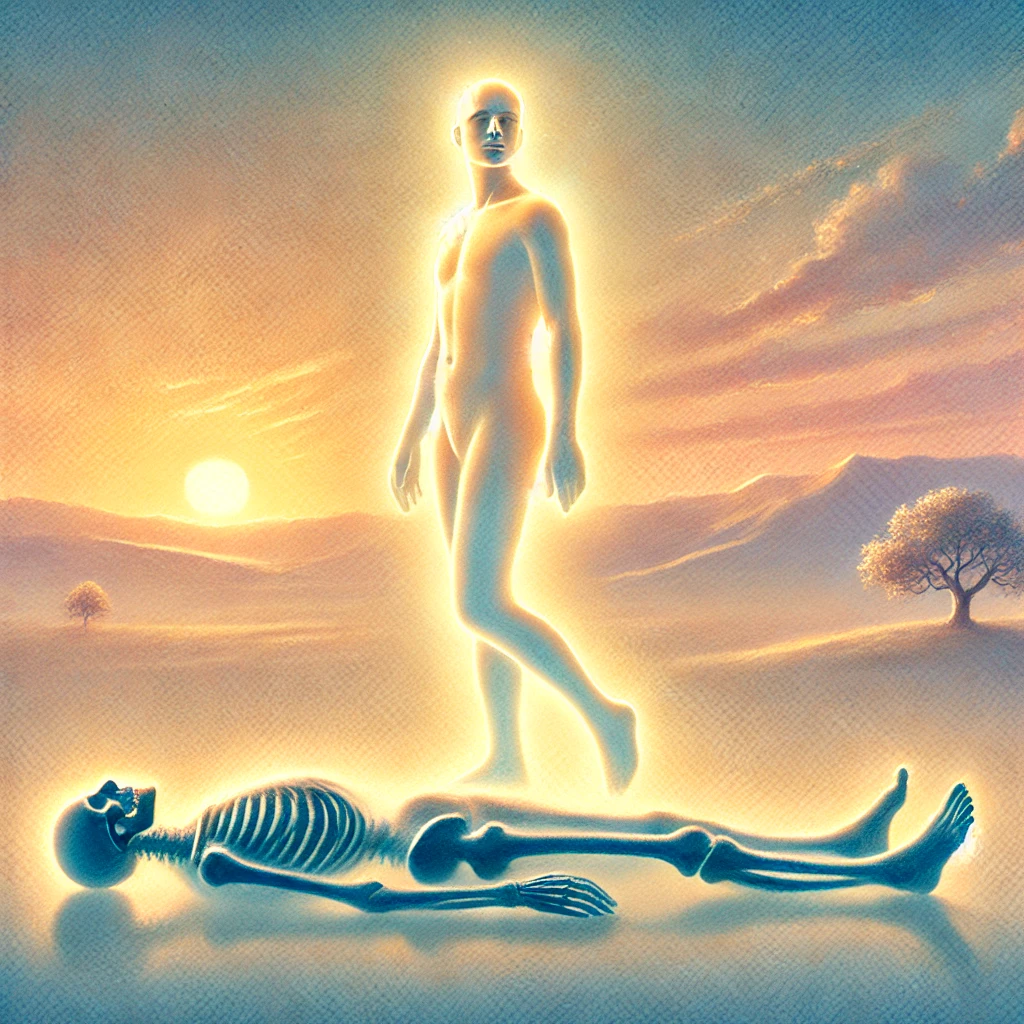
The Bhagavad Gita, Chapter 2, Verse 16, says:
Published:
Published:

Published:
Published:

Published:

Published:

Published:

Published:
Here are the verses from Bhagavad Gita, Chapter 5, Verses 8 and 9:
Published:
In Chapter 5, Verse 7 of the Bhagavad Gita, Lord Krishna describes the qualities and state of mind of a true yogi who is dedicated to selfless action. Here is the verse and its translation:
Published:

Published:

Published:

Published:

Published:

Published:
Published:

Published:

Published:

Published:

Published:

Published:
Published:

Published:

Published:

Published:

Published:

Published:

Published:

Published:

Published:

Published:

Published:

Published:

Published:
The full couplet is:
Published:

Published:

Published:

Published:

Published:

Published:

Published:

Published:

Published:

Published:

Published:

Published:

Published:
Bhagavad Gita - Chapter 3, Verse 17 (3.17)
Published:
Bhagavad Gita - Chapter 3, Verse 13 (3.13):
Published:
Bhagavad Gita - Chapter 3, Verse 14 (3.14):
Published:
Bhagavad Gita - Chapter 3, Verse 15 (3.15):
Published:
Bhagavad Gita - Chapter 3, Verse 16 (3.16):
Published:

Published:

Published:
Here is Bhagavad Gita Chapter 3, Shloka 20, with its translation:
Published:
 Bhagavad Gita, Chapter 3, Shloka 21 (3.21):
Published:
The 22nd verse of Chapter 3 (Karma Yoga) of the Bhagavad Gita, spoken by Lord Krishna, states:
Published:
The Bhagavad Gita, Chapter 3, Shloka 23 (Bhagavad Gita 3.23) states:
Published:
The Bhagavad Gita, Chapter 3, Verse 24 (श्लोक 3.24) states:
Published:
Bhagavad Gita 3.25 (Chapter 3, Verse 25)
Published:
Bhagavad Gita - Chapter 3, Verse 26
Published:
Bhagavad Gita, Chapter 3, Shloka 27:
Published:
The Bhagavad Gita, Chapter 3, Shloka 28 (3.28) states:
Published:
Bhagavad Gita - Chapter 3, Shloka 29 (3.29)
Published:
Bhagavad Gita - Chapter 3, Verse 30 मयि सर्वाणि कर्माणि संन्यस्याध्यात्मचेतसा। निर्वीर्यनिर्ममो भूत्वा युध्यस्व विगतज्वरः॥
Published:
Bhagavad Gita 3.31
Published:
Bhagavad Gita Chapter 3, Verse 32 (Shloka 3.32):
Published:
Bhagavad Gita 3.33
Published:
Published:
Sanskrit:
Published:
In Bhagavad Gita Chapter 3, Verse 36, Arjuna asks Lord Krishna:
Published:
Bhagavad Gita – Chapter 3, Shloka 38 (3.38)
Published:
Bhagavad Gita Chapter 3, Verse 39 addresses the profound impact of desire on human consciousness.
Published:
Bhagavad Gita Chapter 3, Shloka 40 (गीता श्लोक 3.40) is as follows:
Published:
Bhagavad Gita Chapter 3, Shloka 41 (3.41) is as follows in Sanskrit, along with its transliteration and meaning:
Published:
Of course! Here’s Bhagavad Gita 3.42 along with its summary:
Published:
Here’s Bhagavad Gita Chapter 3, Shloka 43 in English:
Published:
📜 Sanskrit (Shloka 4.1) श्रीभगवानुवाच इमं विवस्वते योगं प्रोक्तवानहमव्ययम् | विवस्वान् मनवे प्राह मनुरिक्ष्वाकवेऽब्रवीत् ||
Published:
Here is Bhagavad Gita Chapter 4, Verse 2 (Shloka 4.2) in Sanskrit, along with its transliteration, word-by-word meanings, and English translation:
Published:
संस्कृत श्लोक: बन्धुरात्मात्मनस्तस्य येनात्मैवात्मना जितः। अनात्मनस्तु शत्रुत्वे वर्तेतात्मैव शत्रुवत्॥ ६॥
Published:
📿 Sanskrit Shloka
Published:
Certainly! Here’s Bhagavad Gita Chapter 6, Shloka 8 (6.8) with Sanskrit, translation, and explanation:
Published:
भगवद् गीता – अध्याय 6, श्लोक 9 Sanskrit: सुहृन्मित्रार्युदासीनमध्यस्थद्वेष्यबन्धुषु | साधुष्वपि च पापेषु समबुद्धिर्विशिष्यते || Transliteration: Suhr̥n-mitrāry-udāsīna-madhyastha-dveṣya-bandhuṣu Sādhuṣv api ca pāpeṣu sama-buddhir viśiṣyate
Published:
Here’s Bhagavad Gītā Chapter 6, Verse 10 (6.10) in Sanskrit, along with an English translation and a brief explanation:
Published:
भगवद् गीता – अध्याय 6, श्लोक 11 Sanskrit:
Published:
तत्रैकाग्रं मनः कृत्वा यतचित्तेन्द्रियक्रियः । उपविश्यासने युञ्ज्याद्योगमात्मविशुद्धये ॥6.12॥ Transliteration tatra ekāgraṁ manaḥ kṛtvā yata-citta-indriya-kriyāḥ upaviśhy āsane yuñjyād yogam ātma-viśuddhaye
Published:
श्लोक 6.13 सम्प्रेक्ष्य नासिकाग्रं स्वं दिशश्चानवलोकयन्। प्रशान्तात्मा विगतभीर्ब्रह्मचारिव्रते स्थितः॥
Published:
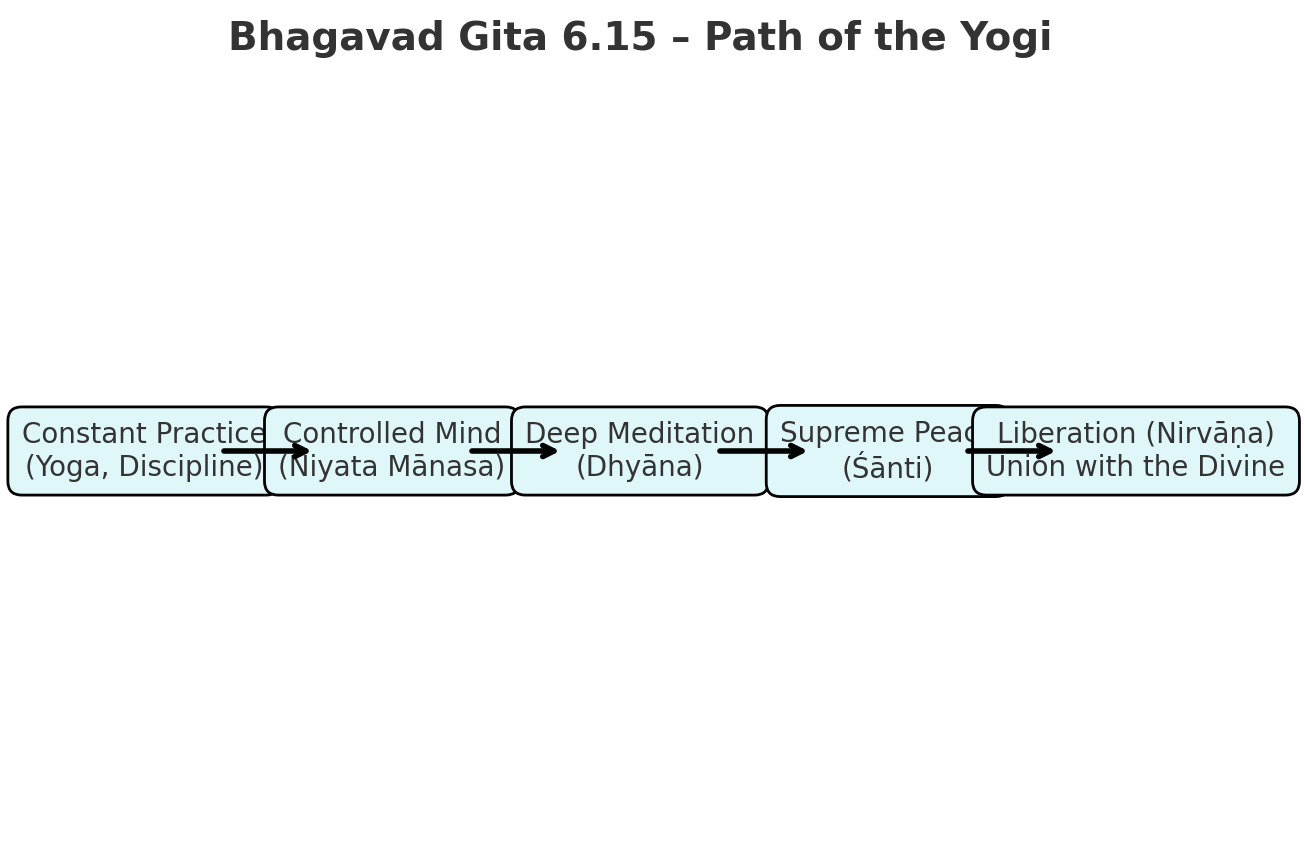
Here’s Bhagavad Gita – Chapter 6, Verse 14 (6.14) in Sanskrit, transliteration, and meaning.
Published:
Published:
Here is Bhagavad Gita Chapter 6, Shloka 16 (6.16):
Published:
Here is Bhagavad Gita, Chapter 6, Shloka 17 (6.17):
Published:
Here is Bhagavad Gita, Chapter 6, Verse 18 (6.18) in Sanskrit with translation and explanation:
Published:
Here is Bhagavad Gita, Chapter 6, Verse 19 (6.19) in Sanskrit with translation and explanation:
Published:
Here is Bhagavad Gita, Chapter 6, Verse 20 (6.20) in Sanskrit, along with transliteration and meaning:
Published:
Here is Bhagavad Gita, Chapter 6, Shloka 21 (6.21):
Published:
Here is Bhagavad Gita, Chapter 6, Shloka 22 (6.22):
Published:
Here is Bhagavad Gita, Chapter 6, Shloka 23 (Sanskrit, transliteration, and meaning):
Published:
Here’s Bhagavad Gita, Chapter 6, Shlok 24 (6.24):
Published:
Bhagavad Gita, Chapter 6, Verse 25 (6.25):
Published:
📜 Sanskrit (Devanagari)
Published:
Bhagavad Gita – Chapter 6, Shloka 27
Published:
भगवद् गीता 6.28 — Shloka, Meaning & Essence Sanskrit
युञ्जन्नेवं सदात्मानं योगी विगतकल्मषः ।
सुखेन ब्रह्मसंस्पर्शमत्यन्तं सुखमश्नुते ॥ ६.२८ ॥
Published:
📜 Bhagavad Gita 6.29
Published:
सरल अर्थ (Hindi Meaning)
Published:
Bhagavad Gita – Chapter 6, Verse 31 (Detailed Explanation in English)
Published:
Published:
Published:
Line 1: जो मैं बौरा तो राम तोरा
Notes: Sa Re Ga Ma Pa, Pa Ma Ga Re Sa
Published:
Moko Kahan Dhundhe Re Bande
Sa Sa Re Ma Ga Re Sa (Sa for emphasis)
Main To Tere Paas Mein
Ma Ma Pa Dha Ni Dha Pa
Published:
Raag Desh (or Raaga Desh) is a traditional raga in Indian classical music, associated with the late evening and monsoon season. Known for its serene, emotional, and patriotic character, it is commonly played to evoke feelings of devotion, longing, and tranquility. Raag Desh is often heard in instrumental performances, vocal compositions, and even patriotic songs in India, such as the iconic Vande Mataram and Jana Gana Mana.
Published:
There are 10 types of Thats:-
Published:
Published in Journal of Mathematical Psychology Volumes 68–69, October–December 2015, Pages 49-58, 2015
The linear ballistic accumulator model is a theory of decision-making that has been used to analyse data from human and animal experiments.
Recommended citation: Andrew Terry and A.A.J. Marley and Avinash Barnwal and E.-J. Wagenmakers and Andrew Heathcote and Scott D. Brown (2015). "Generalising the drift rate distribution for linear ballistic accumulators." Journal of Mathematical Psychology . https://www.sciencedirect.com/science/article/abs/pii/S0022249615000577
Published in 2019 New York Scientific Data Summit (NYSDS), 2019
Survival month for non-small lung cancer patients depend upon which stage of lung cancer is present. Our aim is to identify smoking specific gene expression biomarkers in prognosis of lung cancer patients. In this paper, we introduce the network elastic net, a generalization of network lasso that allows for simultaneous clustering and regression on graphs. In network elastic net, we consider similar patients based on smoking cigarettes per year to form the network. We then further find the suitable cluster among patients based on coefficients of genes having different survival month structures and showed the efficacy of the clusters using stage enrichment. This can be used to identify the stage of cancer using gene expression and smoking behavior of patients without doing any tests.
Recommended citation: A. Barnwal, "Network Elastic Net for Identifying Smoking specific gene expression for lung cancer," 2019 New York Scientific Data Summit (NYSDS), New York, NY, USA, 2019, pp. 1-4, doi: 10.1109/NYSDS.2019.8909802. https://ieeexplore.ieee.org/abstract/document/8909802
Published in 2019 New York Scientific Data Summit (NYSDS), 2019
Predicting the direction of assets have been an active area of study and difficult task. Machine learning models have been used to build robust models to model the above task. Ensemble methods are one of them resulting better than single supervised method. We have used generative and discriminative classifiers to create the stack, particularly 3 generative and 6 discriminative classifiers and optimized over one-layer Neural Network to model the direction of price cryptocurrencies. Features used are technical indicators not limited to trend, momentum, volume, volatility indicators and sentiment indicators. For Cross validation, Purged Walk forward cross validation has been used. In terms of accuracy, we have done comparative analysis of the performance of Ensemble method with Stacking and individual models. We have also developed methodology for features importance for stacked model. Important indicators are identified based on feature importance.
Recommended citation: A. Barnwal, H. P. Bharti, A. Ali and V. Singh, "Stacking with Neural Network for Cryptocurrency investment," 2019 New York Scientific Data Summit (NYSDS), 2019. https://ieeexplore.ieee.org/document/8909804
Published in Journal of Computational and Graphical Statistics, 31(4), 1292–1302, 2022
Loss functions for learning accelerated failure time (AFT) models in XGBoost, adding survival modeling for different kinds of label censoring, with GPU acceleration.
Recommended citation: Barnwal, A., Cho, H. and Hocking, T. (2022). "Survival regression with accelerated failure time model in XGBoost." Journal of Computational and Graphical Statistics, 31(4), 1292–1302. arXiv:2006.04920. https://arxiv.org/pdf/2006.04920.pdf
Published:
Poster Presentation of the paper 
Published:
Poster Presentation of the paper 
Graduate course, Stony Brook University, Applied Mathematics and Statistics, 2017


